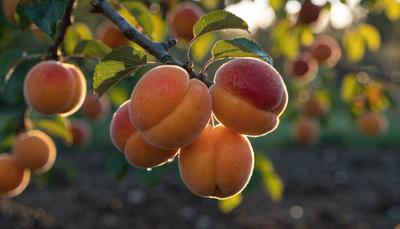
A tree-ripened organic peach — sun-warm and dripping down your wrist — is a flavor the grocery store simply can't sell you, because real peaches are too fragile to ship at their peak. Grow them yourself in living soil and skip the synthetic sprays, and you get that flavor plus a healthier orchard, cleaner fruit, and ground that grows richer each season.
Peaches (Prunus persica) have a reputation for being fussy, but most of the fussiness comes down to a handful of decisions you make before the tree ever goes in the ground: the right cultivar for your climate, a sunny well-drained spot, and a commitment to annual pruning. Nail those, feed the soil biology instead of the plant, and a single backyard tree can hand you bushels of fruit for well over a decade. Whether you're planting your first patio dwarf or managing a small home orchard, this guide covers every stage of growing peaches organically.
Choosing the Right Peach Varieties
More than almost any other backyard fruit, peach success starts with matching the cultivar to your climate — specifically to your chill hours, the cumulative hours below 45°F a tree needs each winter to break dormancy and bloom properly. Plant a high-chill variety in a mild-winter region and it will bloom erratically and barely fruit; plant a low-chill variety where hard frosts linger and it blooms too early and loses its flowers to a late freeze.
Freestone vs. Clingstone (and Yellow vs. White)
In a freestone peach the flesh separates cleanly from the pit — ideal for fresh eating, slicing, and freezing. In a clingstone the flesh grips the pit; these tend to be juicier and are the classic canning peach. Flesh color is a flavor cue too: yellow-fleshed peaches carry that familiar sweet-tart tang, while white-fleshed varieties are lower in acid and taste honey-sweet and floral.
Best Varieties for Organic Growing
- Redhaven — the benchmark early-season freestone. Reliable, productive, and widely adapted; a great first tree for most zones.
- Contender — exceptionally cold-hardy (down to zone 4) with good bacterial-spot resistance, making it a low-spray standout for northern growers.
- Reliance — among the most cold-tolerant peaches available; forgives tough winters and late frosts.
- Belle of Georgia — a vigorous, disease-tolerant white freestone with old-fashioned flavor.
- Elberta — the classic large yellow freestone; heirloom flavor and great for canning.
- Frost and Avalon Pride — genuinely resistant to peach leaf curl, the single biggest organic headache in cool, wet-spring climates like the Pacific Northwest.
- Flordaprince, Tropic Snow, and Bonita — low-chill varieties (roughly 150–400 hours) for the Deep South, Gulf Coast, and mild California zones.
- Bonanza and other genetic dwarfs — top out around 5–6 feet and thrive in large containers.
One relief: nearly all peaches are self-fertile, so a single tree will set a full crop with no pollinizer needed. (The old variety 'J.H. Hale' is the notable exception — it needs a partner.) If you buy grafted, note the rootstock too: Lovell and Guardian give full-size trees, while Citation produces a naturally smaller, more manageable tree.
Soil Preparation
If peaches have one non-negotiable demand, it's drainage. Their roots will not tolerate sitting in water, and soggy soil is a fast track to root rot and a short-lived tree.
Ideal Soil Conditions
Peaches want a deep, well-drained sandy or loamy soil in full sun — at least six to eight hours a day. Aim for a slightly acidic pH between 6.0 and 6.5; a cheap soil test before planting is money well spent. If you garden in heavy clay, plant on a raised mound or berm 12–18 inches high to lift the crown above standing water, and pick a spot on a gentle slope where cold air and excess moisture can drain away. Avoid low frost pockets, and avoid replanting where another peach, plum, or cherry recently stood, which invites replant disease.
Building Living Soil
Organic peach growing is really soil growing. Rather than force-feeding the tree soluble salts, you feed a living web of bacteria, fungi, and earthworms that in turn feed the tree on demand. Before planting, work 2–4 inches of finished compost into the top foot of your planting area (a wide zone, not just the hole) to build organic matter and structure. Compost, leaf mold, and aged manure fuel the microbial life that unlocks nutrients and helps roots resist stress and disease.
The keystone move is inoculating the root zone with beneficial biology. A dose of Microbes at planting introduces mycorrhizal fungi and soil bacteria that colonize the roots, dramatically expanding their reach for water and phosphorus. That partnership is what turns dead dirt into a living, self-feeding system — and it's the foundation everything else builds on.
Planting: Timing & Technique
Peaches are perennial trees, so unlike annual vegetables you frame planting around dormancy and your USDA hardiness zone rather than a spring frost date. Most peaches thrive in zones 5–9, with cold-hardy cultivars pushing into zone 4 and low-chill types suited to the warm end of zone 9.
When to Plant
Plant bare-root trees in late winter to early spring while they're still dormant, as soon as the ground is workable. This lets roots establish before the tree leafs out and summer heat arrives. Container-grown trees can go in through spring and even early fall in mild climates, but dormant bare-root planting gives the strongest first-year establishment and is far cheaper.
Transplanting Technique
Dig a hole twice as wide as the root system but no deeper than the roots themselves — you want the graft union sitting 2–3 inches above the soil line. Skip the temptation to backfill with rich potting mix; use the native soil you dug out, amended lightly with compost, so roots learn to push outward instead of circling in a cushy pocket. Spread the roots, backfill, firm gently, and water in deeply to settle out air pockets. Then head the young "whip" back to about 24–30 inches to force the low branching that builds a strong open-center (vase) shape — the ideal architecture for peaches, which fruit on last year's wood and need sunlight reaching the center of the canopy.
Spacing
- Standard trees: 15–20 feet apart.
- Semi-dwarf: 12–15 feet apart.
- Genetic dwarf / containers: 6–8 feet, or a single 15–20 gallon pot.
Short on space? Plant more densely and hold size down with summer pruning, keeping trees to a pickable 8–10 feet.
Companion Planting
A peach tree does best at the center of a small guild, not alone in a lawn. Thoughtful companions attract pollinators, repel pests, and feed the soil:
- Alliums (garlic, chives, ornamental onions) planted around the trunk help deter borers and aphids.
- Daffodils ringing the base discourage voles and gophers from gnawing bark and roots.
- Nasturtium and marigold lure aphids away and pull in predatory insects.
- Comfrey is a superb companion — its deep roots mine minerals, and you can chop-and-drop the leaves as a potassium-rich mulch.
- Yarrow, dill, fennel, and borage feed ladybugs, lacewings, and parasitic wasps that hunt peach pests.
- White clover or another low legume as a living groundcover fixes nitrogen and keeps soil covered.
Keep the mulch and companions pulled back a few inches from the trunk itself to avoid trapping moisture against the bark, which invites borers and rot.
Watering Peaches Organically
Peaches need steady moisture but despise wet feet — the whole game is deep, consistent watering paired with excellent drainage.
Best Practices
Give trees roughly 1–2 inches of water per week, delivered deeply and infrequently to drive roots down, not keep them shallow. Young trees in their first two seasons need the most attention; water them every few days through their first summer. The most critical window for established trees is fruit sizing in the weeks before harvest — drought stress here means small, mealy peaches. A 3–4 inch ring of wood-chip or straw mulch (kept off the trunk) conserves moisture, moderates soil temperature, and feeds the soil food web as it breaks down. Drip irrigation or a soaker hose is ideal: it keeps foliage dry, which is your first line of defense against fungal and bacterial disease.
Signs of Problems
Underwatering shows as wilting during heat, leaf curl or scorch, and premature fruit drop. Overwatering is sneakier and more dangerous — yellowing leaves, an oddly wilted look despite wet soil, and a musty smell around the crown all point to root rot. When in doubt, dig down a few inches: water only when the top 2–3 inches have dried out.
Organic Fertilizing Schedule for Peaches
Peaches are moderate feeders, and the biggest organic mistake is overdoing nitrogen — it drives soft, leafy growth at the expense of fruit and leaves the tree vulnerable to winter injury and disease. Feed on a stage-by-stage rhythm and let living soil do the heavy lifting.
You don't need all of these — Microbes, Veg, and Bloom are the core system; the rest are optional boosters for specific goals.
- At planting: Inoculate the root zone with Microbes — work it into the backfill so beneficial fungi colonize the roots from day one. Follow with a drench of Kelp It Real to ease transplant shock and spur early root growth.
- Early spring, at bud break: As buds swell and new shoots push, feed Veg to support healthy leaf and shoot growth. Established trees get their main feeding now, just before bloom.
- Bloom and fruit set: Switch to Bloom to fuel flowering and fruit development. Apply as blossoms open and again after the fruit has set.
- Fruit sizing (late spring into summer): For bigger, denser, sweeter peaches, add Incredible Bulk alongside Bloom while fruit is swelling. This is the booster that pays off at harvest.
- Heat and stress: During heat waves or drought, a foliar or soil dose of Kelp It Real improves resilience and reduces fruit drop.
- After harvest / late summer: Ease off. Stop nitrogen feeding by midsummer so the tree hardens off for winter instead of pushing tender growth. A top-dress of compost in fall quietly feeds the soil biology through dormancy.
Renew the Microbes application each spring to keep the soil food web thriving — a healthy fungal network is your cheapest, most durable fertilizer.
Organic Pest Control
Peaches attract their share of insects, but a healthy tree in living soil, plus a few well-timed organic tactics, keeps most in check. Prevention beats reaction.
- Peach tree borer — the most serious peach pest. Larvae tunnel into the lower trunk and crown, leaving gummy, sawdust-flecked ooze at the base. Keep trunks healthy and unwounded, clear weeds and mulch back from the base, and apply beneficial nematodes to the soil around the crown in late summer.
- Oriental fruit moth — larvae bore into shoot tips (causing wilted "flagging") and later into fruit. Hang pheromone traps to monitor and use mating-disruption dispensers in larger plantings.
- Plum curculio — a weevil that leaves telltale crescent-shaped scars and causes fruit to drop. Spraying kaolin clay (a fine white mineral coating) at petal fall deters egg-laying, and diligently collecting dropped fruit breaks the cycle.
- Green peach aphids — cluster on new growth, curling leaves. Blast them off with water, spray insecticidal soap, and support ladybugs and lacewings.
- Stink bugs and tarnished plant bug — cause "catfacing," the dimpled, scarred fruit deformities. Weed management and beneficial habitat help.
- San Jose scale and spider mites — knock both back with a dormant horticultural oil spray in late winter, which smothers overwintering eggs.
Your foundational tools: a dormant oil spray, kaolin clay during early fruit, ruthless sanitation (never leave dropped or mummified fruit under the tree), and a garden full of beneficial insects.
Common Diseases and Organic Solutions
- Peach leaf curl (Taphrina deformans) — the signature peach disease: leaves emerge thickened, puckered, and reddish in cool wet springs. The organic fix is timing, not rescue — spray copper or lime-sulfur at leaf drop in fall and again at bud swell in late winter, before infection occurs. Better yet, plant a resistant cultivar like Frost or Avalon Pride.
- Brown rot (Monilinia) — blights blossoms and rots ripening fruit into gray fuzzy "mummies." Thin fruit for airflow, remove every mummy from tree and ground, and apply sulfur sprays as fruit ripens in humid climates.
- Bacterial spot (Xanthomonas) — dark specks on leaves and cracked spots on fruit, worst in warm humid areas. Choose resistant varieties (Contender, Redhaven, Belle of Georgia), avoid overhead watering, and don't over-fertilize.
- Peach scab — small olive-green spots that merge into scabby patches on the fruit surface; sulfur sprays and good airflow manage it.
- Cytospora / Leucostoma canker — sunken, gummy cankers that enter through wounds and pruning cuts. Prune only in dry weather, make clean cuts, and keep trees vigorous.
- Phytophthora root and crown rot — a drainage disease, plain and simple. The prevention is site selection and raised planting, not a spray.
The organic disease program is consistent across all of these: resistant varieties, airflow through proper pruning, dry foliage, dormant-season copper and oil, and obsessive sanitation.
Harvesting Peaches
Depending on cultivar and climate, peaches ripen anywhere from late May (low-chill Southern types) through September. A well-chosen mix of early, mid, and late varieties can stretch your fresh-eating season across two months or more.
When to Harvest
Peaches build almost all their sugar on the tree, so patience pays. Watch the ground color — the background beneath the red blush should shift from green to a warm golden-yellow or creamy white (never green). A ripe peach gives slightly to gentle pressure along the shoulders, smells intensely fragrant, and releases from the branch with a gentle upward twist rather than a hard pull. Pick in the cool of morning and cradle each fruit — peaches bruise if you look at them wrong.
Storage and Extending the Harvest
Peaches picked at the "give slightly, smell great" stage will finish softening on the counter over a day or two. Fully ripe peaches hold in the refrigerator for about 3–5 days; let them return to room temperature before eating for full flavor. For a longer haul, freeze sliced freestones (a squeeze of lemon prevents browning), can them in light syrup, or dry them.
Common Problems and Troubleshooting
Why is my peach tree not fruiting?
The usual suspects: the tree is simply too young (peaches need 2–4 years to bear); a late spring frost killed the open blossoms; the variety's chill requirement doesn't match your winters, so it blooms erratically; or the tree wasn't pruned, so it's carrying too much old wood that no longer fruits. Excess nitrogen is another culprit — a lush, leafy tree with no fruit is often overfed. Make sure it's getting full sun, too.
Why are my peaches small and dropping early?
A little natural "June drop" is normal as the tree sheds excess fruit. Beyond that, small fruit almost always means you skipped thinning — thin young fruit to one every 6–8 inches about 4–6 weeks after bloom, and you'll trade a hundred marbles for a few dozen big peaches. Drought stress during sizing and plum curculio damage also cause premature drop.
Why are the new leaves red, thick, and puckered?
That's peach leaf curl. There's no in-season cure once leaves are infected — remove badly affected foliage, keep the tree well-fed and watered to push healthy new growth, and commit to the preventive copper spray at leaf drop and bud swell next season. Long-term, replace with a resistant variety.
Frequently Asked Questions
Do I need two peach trees to get fruit?
No. Almost all peach varieties are self-fertile, so a single tree will produce a full crop on its own. The rare exception is 'J.H. Hale,' which needs a second variety nearby for pollination.
How long until a peach tree produces fruit?
Most peach trees begin bearing 2–4 years after planting, with genetic dwarfs often fruiting a bit sooner. Resist the urge to let a young tree carry a heavy crop too early; thin hard so the tree puts energy into building a strong framework.
What are chill hours and why do they matter?
Chill hours are the cumulative hours below 45°F a peach experiences over winter. Each variety needs a specific amount to bloom and fruit properly. Match the cultivar to your region — high-chill for cold-winter areas, low-chill for mild-winter zones — and this one decision prevents most peach disappointments.
Can I grow peaches in a container?
Yes. Genetic dwarf varieties like 'Bonanza' stay around 5–6 feet and thrive in a large 15–20 gallon pot with excellent drainage. Container trees need more frequent watering and feeding, plus winter protection in cold climates, but they let anyone with a sunny patio grow their own peaches.
How do I prevent peach leaf curl organically?
Timing and variety are everything. Spray organic copper or lime-sulfur once at leaf drop in fall and again at bud swell in late winter — before the fungus infects new leaves. Choosing a resistant cultivar such as Frost or Avalon Pride can eliminate the problem entirely.