Few things beat walking into your own backyard and pulling a sun-warmed orange straight off the branch. Oranges (Citrus sinensis) are the workhorse of the home citrus grove: they are handsome evergreens, they flower with an unforgettable perfume, and a single mature tree can hand you dozens of pounds of fruit every winter. The good news for organic gardeners is that citrus responds beautifully to a living-soil approach. Feed the soil, keep the root zone alive with beneficial microbes, and an orange tree will largely take care of itself. This guide walks you through everything from choosing a cultivar to troubleshooting yellow leaves, all without a single synthetic input.
Choosing the Right Orange Varieties
The variety you plant determines your harvest window, your flavor, and even whether you can grow in a pot on a patio. Oranges fall into a few broad camps: navels (seedless, easy to peel, eaten fresh), Valencia types (juicing oranges that hang late), blood oranges (berry-toned flesh), and sweet-tart specialty types. Choose based on your climate and how you like to eat citrus.
Navel Oranges
Washington Navel is the classic dooryard orange: seedless, richly sweet, and ripening from late fall into winter. Cara Cara is a pink-fleshed navel with a low-acid, almost berry-like flavor that has become a farmers-market favorite. Lane Late and Washington Navel together can stretch your navel season for months.
Valencia and Juicing Oranges
Valencia is the premier juice orange, ripening in spring and summer, often carrying two crops on the tree at once. In hot, humid Gulf climates, early-season Hamlin and Parson Brown are reliable, juicy choices that ripen before hard frosts arrive.
Blood and Specialty Oranges
Blood oranges like Moro, Tarocco, and Sanguinello develop crimson flesh when nights turn cool, making them best suited to inland climates with a real winter chill. Trovita is a sweet, all-purpose orange that colors well even in mild-winter, desert-influenced regions.
Rootstock and Dwarfing (Read This Before You Buy)
Almost every orange tree you buy is grafted onto a rootstock, and the rootstock matters as much as the variety. Standard trees reach 15 to 25 feet. For containers or small yards, ask for a tree on a dwarfing rootstock such as Flying Dragon (a contorted trifoliate orange), which keeps a tree in the 6-to-10-foot range and thrives in a large pot. Never plant below the graft union, and always keep that union a few inches above the soil line.
Soil Preparation
Oranges are shallow-rooted, oxygen-hungry trees. More home citrus is killed by wet, airless soil than by cold. Your entire soil strategy should aim for one thing: fast drainage married to steady biology.
Ideal Soil
Citrus wants a loose, well-draining loam with a slightly acidic to neutral pH, roughly 6.0 to 7.0. If your soil is heavy clay, do not dig a small hole and backfill with fluffy amendment; that just creates a bathtub that collects water and drowns the roots. Instead, plant on a raised mound or a broad berm 10 to 18 inches high so the crown sits above the surrounding grade and excess water drains away. Sandy soils are actually fine for citrus as long as you feed the biology and mulch to hold moisture.
Building Living Soil
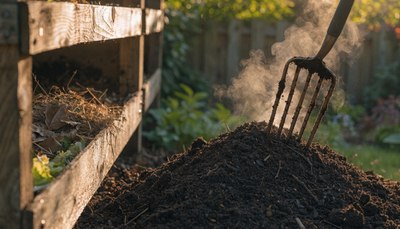
Organic orange growing lives and dies on soil life. The goal is a root zone teeming with beneficial fungi and bacteria that unlock nutrients, buffer stress, and crowd out root pathogens. Start with generous composting worked lightly into the top few inches around the planting site, never piled against the trunk. Finished compost feeds the microbial web that a chemical program simply skips over.
To jump-start that biology, inoculate the root zone with Microbes, our living soil inoculant. Beneficial mycorrhizal fungi colonize citrus roots and dramatically extend their reach for phosphorus and water, which is exactly what a shallow-rooted tree needs. In the year before you plant, or in the aisles of an established grove, a cover crop of clover or vetch feeds the soil and fixes nitrogen naturally; our guide to cover crops and green manure covers how to work them in.
Planting: Timing & Technique
Timing is climate-specific. In zones 9 through 11, plant in early spring once hard frost is past, giving the tree a full warm season to establish before its first winter. In the mildest coastal areas, fall planting also works. Avoid planting in the heat of midsummer, when a young tree struggles to keep up with water demand.
How to Plant
Dig a hole no deeper than the root ball and about twice as wide. Set the tree so the top of the root ball sits an inch or two above grade, keeping the graft union well clear of the soil. Backfill with the native soil you removed rather than pure potting mix; you want roots to move outward into real ground, not circle in a pocket of fluff. Firm gently, water in deeply to settle the soil, and mulch with 2 to 3 inches of wood chips, keeping a clear 6-inch gap around the trunk to prevent collar rot.
A Note on Seeds
You can sprout an orange from a seed, and it is a fun project, but be honest about what you will get. Most orange seeds are nucellar, meaning many seedlings come more or less true to the parent, yet they revert to a wild, thorny juvenile form and can take 7 to 15 years to fruit. For actual harvests, buy a grafted tree. If you still want to experiment with seedlings or grow companion herbs from seed, our guide to starting seeds indoors will get you going. In truly cold regions, the smart move is a dwarf tree in a pot that summers outdoors and overwinters in a bright, cool room.
Companion Planting
An orange tree is a permanent resident, so companions should earn their keep around the drip line without competing hard for water. Aromatic herbs and insectary flowers are the best neighbors. Alyssum, dill, fennel, and yarrow draw in the lacewings, hoverflies, and parasitic wasps that keep aphids and scale in check. Clover grown as a living mulch fixes nitrogen and shades the shallow feeder roots.
Nasturtiums make a useful aphid trap crop, and a border of alliums such as chives can help deter some soft-bodied pests. Keep turf grass out from under the canopy; lawn is a heavy feeder that steals nitrogen and water from citrus. For the full framework of who grows well with whom, see our companion planting guide.
Watering Oranges Organically
Citrus wants deep, infrequent watering rather than frequent sips. The pattern that keeps trees healthy is to soak the root zone thoroughly, then let the top few inches of soil dry before watering again. Stick a finger 3 to 4 inches down; if it is dry there, it is time to water.
A young tree typically needs watering one to three times a week in warm weather, tapering as it establishes. Mature in-ground trees may go a week or more between deep soakings in cool months. Container trees dry out fast and need closer attention, sometimes daily in peak summer heat. The two extremes to avoid are constant sogginess, which invites root rot, and repeated bone-dry stress, which triggers fruit drop and leaf loss. Consistent moisture during flowering and fruit set is critical; wild swings are the number-one cause of small harvests. A thick organic mulch is your best friend here, buffering both temperature and moisture. Water at the soil, not on the leaves, to limit fungal disease.
Organic Fertilizing Schedule for Oranges
Oranges are famously hungry feeders, especially for nitrogen. Because they are evergreen, they draw on nutrients nearly year-round in mild climates, but the smart approach is to concentrate feeding during the active growth-and-fruiting window and ease off as growth slows in late fall and winter. An organic program feeds gradually through the soil food web, so there is very little risk of the harsh salt burn that comes with synthetic citrus spikes.
Late Winter to Early Spring (Waking Up)
As days lengthen and new growth begins, start with the foundation. Drench the root zone with Microbes to re-activate the soil biology after the cool season, then begin nitrogen-forward feeding with Veg to fuel the spring flush of leaves and shoots. Healthy new growth now sets up a strong bloom.
Bloom and Fruit Set (Spring)
When flower buds appear and the tree perfumes the whole yard, shift toward Bloom to support flowering and a strong fruit set. This is also the moment to reduce stress, since heat spikes or dry spells cause blossoms and pea-sized fruit to drop. A foliar or soil dose of Kelp It Real feeds roots and builds stress resilience right when the tree needs it most.
Fruit Development (Summer into Fall)
As green fruit sizes up over the summer, keep steady nutrition flowing with alternating Veg and Bloom to balance canopy growth against fruit fill. For growers chasing bigger, denser fruit and heavier yields, Incredible Bulk is the power-up that pushes size and quality during this bulking phase.
Late Fall and Winter (Slow Down)
As growth naturally slows, back off nitrogen. In frost-prone areas, stop heavy feeding several weeks before your first expected frost, because tender new growth pushed late is the most cold-sensitive tissue on the tree. A maintenance drench of Microbes keeps the root zone alive through the cool months without forcing a growth flush.
You do not need all of these — Microbes, Veg, and Bloom are the core; the rest are optional boosters. Start with the three essentials, get comfortable, and add Kelp It Real and Incredible Bulk only when you want to fine-tune stress resilience or harvest size.
Organic Pest Control
Most citrus pests are manageable with vigilance, a strong stream of water, and the beneficial insects your companion plants attract. Watch for these:
- Aphids cluster on tender new growth and curl leaves. Blast them off with water, encourage lacewings and ladybugs, and spot-treat heavy outbreaks with insecticidal soap or a light horticultural oil.
- Citrus leafminer larvae tunnel silvery, serpentine trails inside new leaves. Damage looks alarming but rarely harms a mature tree. Avoid over-fertilizing with fast nitrogen that pushes constant tender flushes, and prune off the worst-hit tips.
- Scale and mealybugs appear as bumps or cottony masses on stems and leaf undersides, often with sticky honeydew and black sooty mold. Horticultural oil smothers them; ants that farm them can be blocked with sticky bands on the trunk.
- Spider mites and citrus red mites stipple leaves in hot, dusty conditions. Rinse the canopy and support natural predators.
- Asian citrus psyllid is the serious one: a small mottled-brown insect that spreads the incurable disease Huanglongbing. If it is present in your region, monitor closely and follow local quarantine guidance.
For a deeper toolkit on soaps, oils, row covers, and building a predator-friendly garden, see our organic pest control guide.
Common Diseases & Organic Solutions
Prevention beats cure with citrus. Good drainage, airflow, clean tools, and living soil head off most problems before they start.
- Phytophthora root rot, foot rot, and gummosis thrive in soggy soil and against buried trunks. You will see oozing sap on the bark and a thinning, yellowing canopy. The fix is cultural: improve drainage, pull mulch and soil back from the trunk, and keep the graft union high and dry. A vigorous population of Microbes helps suppress these soil pathogens naturally.
- Greasy spot shows as yellow blotches turning to greasy brown spots on leaf undersides, worst in humid climates. Rake and remove fallen leaves to break the cycle and improve air circulation with light pruning.
- Sooty mold is a black film growing on the honeydew left by aphids, scale, and whiteflies. Control the insects and the mold disappears.
- Citrus canker causes raised, corky lesions with yellow halos on leaves and fruit and is regulated in some states. Remove and dispose of infected material and avoid working the tree when wet.
- Huanglongbing (citrus greening), spread by the Asian citrus psyllid, causes blotchy mottled leaves and lopsided, bitter fruit. There is no cure; the only defense is controlling the psyllid and buying certified disease-free trees.
Harvesting Oranges
Here is the rule that trips up new citrus growers: oranges do not ripen after picking, and rind color is a poor guide to ripeness. A fully sweet orange can still look partly green in warm climates, and cool nights are what turn the skin orange. The only real test is taste. Once fruit reaches full color for your variety and the expected season, pick one and try it. If it is sweet, start harvesting; if not, leave the rest on the tree, which is the best storage there is.
Clip or gently twist fruit free, taking care not to tear the rind, which invites rot. Navels are best eaten within a few weeks of picking, while Valencias hold on the tree for months. A great feature of citrus is that you can harvest gradually over a long window rather than all at once.
Common Problems & Troubleshooting
Why is my orange tree dropping all its fruit?
Some fruit drop is completely normal. Trees set far more flowers than they can carry and shed the excess in an early-summer "June drop." Excessive drop, though, usually points to water stress from swinging between soggy and bone-dry, a sudden heat wave during bloom, or a nutrient shortfall. Keep soil moisture even, mulch deeply, and support fruit set with balanced feeding and a Kelp It Real drench during stressful stretches.
Why are my orange leaves turning yellow?
Yellowing has several possible causes, so read the pattern. Uniform paling of older leaves usually means a nitrogen shortage, correctable with Veg. Yellow leaves with green veins point to iron or zinc deficiency, common when soil is too wet or the pH is off. Overall decline with dropping leaves often traces back to overwatering and root rot. Because citrus nutrient uptake depends on active soil biology, a struggling tree frequently improves once you rebuild the root zone with Microbes and correct drainage.
Why won't my orange tree fruit?
The usual culprit is age; a young or seed-grown tree simply is not mature enough yet. Beyond that, too little sun (citrus wants at least 6 to 8 hours), a hard freeze that killed the blossoms, or overfeeding nitrogen that pushes leaves at the expense of flowers can all suppress fruiting. Give the tree its brightest spot, ease off nitrogen, and shift toward Bloom as flowering approaches.
Frequently Asked Questions
Can I grow an orange tree in a container?
Yes, and it is the best way to grow oranges outside zones 9 to 11. Choose a variety on dwarfing Flying Dragon rootstock, use a large pot (15 gallons or more) with excellent drainage, and site it in full sun. In cold regions, wheel it into a bright, cool room before the first frost and water sparingly through winter. Container citrus needs more frequent feeding and watering than in-ground trees because nutrients flush out of the pot.
How long until a new orange tree bears fruit?
A grafted nursery tree typically produces its first real crop within 2 to 4 years of planting, and hits full production around years 5 to 8. Seed-grown trees can take 7 to 15 years and may never match the parent's fruit quality, which is why grafted trees are the standard for home growers.
What temperature is too cold for oranges?
Sweet oranges are damaged when temperatures drop into the mid-20s°F for a sustained period; fruit can be harmed around 28°F and wood at roughly 25°F and below. Young trees are far more tender than established ones. In marginal areas, protect trees with frost cloth, string incandescent lights in the canopy on cold nights, and water the soil before a freeze, since moist soil holds heat better than dry.
Do I need more than one orange tree to get fruit?
No. Sweet oranges are self-fertile, so a single tree will set a full crop on its own. Bees still improve fruit set, so encourage pollinators with flowering companions, but you do not need a second tree for cross-pollination.
Is organic citrus fertilizer really enough for such a hungry tree?
Absolutely. Oranges evolved to thrive in biologically active soil, and an organic program that pairs compost, mulch, and living-soil inputs delivers steady nitrogen and micronutrients without the salt buildup that plagues synthetic feeding. The key is consistency and healthy soil biology. Keep the microbial web fed with Microbes and match feeding to the season, and your tree will reward you for decades.