How to Grow Bok Choy Organically — Fast, Nutritious Asian Greens
If you've never grown bok choy, you're leaving one of the most productive beds in the garden empty. Baby bok choy can go from seed to harvest in as little as 30 days. Full-size bok choy follows at 45–60 days. In the time it takes a tomato plant to set its first flower, you can have had two full successions of bok choy. It's one of the fastest-maturing vegetables available to a home gardener, and it delivers serious nutrition: vitamins A, C, and K, calcium, potassium, and folate in every head.
The catch — there always is one — is that bok choy is a cool-season brassica that bolts aggressively in heat. Plant it at the wrong time and instead of crisp, sweet heads you'll get bitter, flowering stalks within days. Plant it right — in spring before the heat arrives, or as a fall crop when temperatures are dropping — and it almost grows itself. In mild climates, it's a near year-round producer.
This guide covers everything you need to get continuous harvests: the differences between bok choy types, soil preparation, planting timing and technique, watering, a targeted organic feeding schedule, pest management for the brassica-specific problems (flea beetles, cabbage worms, aphids), and a succession planting strategy to keep your harvests rolling rather than all coming at once.
Choosing the Right Varieties
The "bok choy" family includes several related Asian brassicas worth distinguishing before you buy seeds.
Standard Bok Choy
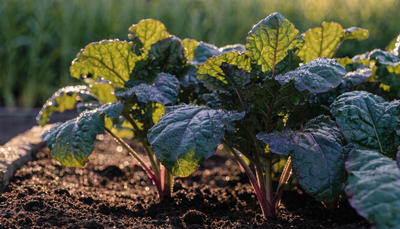
The classic type with wide white or pale green crisp stalks and dark green, glossy leaves. Varieties like 'Prize Choy,' 'Joi Choi,' and 'Shanghai Green' reach 10–15 inches tall at maturity (50–60 days from seed). These are the heads you see in grocery stores. Best for stir-fries, soups, and braises where the distinct stalk and leaf textures shine.
Baby Bok Choy
Technically the same plant, harvested young — typically at 4–6 inches tall, 25–35 days from seed. Some varieties like 'Dwarf Pak Choi' are bred specifically for baby harvest, staying compact and slow to bolt. Baby bok choy is sweeter and more tender than full-size, excellent raw in salads or quickly sautéed whole. The rapid maturity makes it ideal for succession planting.
Pac Choi / Pak Choi
Often used interchangeably with bok choy in seed catalogs, pac choi is a slightly different selection with more rounded leaves and broader, flatter stalks. Varieties include 'Canton Pak Choi' and 'Black Summer.' Flavor and growing requirements are essentially identical to standard bok choy.
Tatsoi
A flat-growing, spoon-shaped variety that forms dense, rosette-like heads close to the ground. Tatsoi is slower to bolt than standard bok choy, extremely cold-hardy (survives light frost easily), and has a slightly more peppery, mustard-tinged flavor. Outstanding for fall and winter growing in zones 6–9. Harvest individual outer leaves for a cut-and-come-again harvest, or pull the whole rosette.
Which to Grow
For beginners, start with baby bok choy and tatsoi together — the baby bok choy gives you fast results in under five weeks while the tatsoi provides longer-season production and cold tolerance. For maximum yield per square foot, add a full-size variety as a second sowing once you've nailed the basics.
Soil Preparation
Bok choy is a fast, heavy feeder. In 30–60 days it needs to build a full head of crisp, dense leaves — that requires readily available nutrients and excellent moisture retention. Skimping on soil preparation shows up almost immediately as slow growth and small, pale heads.
Ideal soil conditions:
- Rich in organic matter — 3–4 inches of finished compost worked into the top 8 inches
- Consistently moist with excellent drainage — bok choy hates standing water but wilts fast if allowed to dry out
- pH 6.0–7.0, ideally 6.5–6.8
- Fine, loose texture for easy root penetration in its short growing window
Because bok choy grows so fast, nutrients need to be in a plant-available form quickly. Slow-release organic amendments that need months to break down won't help much in a 30-day crop. The most effective approach is to build nutrient-dense, biologically active soil that mineralizes nutrients continuously throughout the short growing window.
Building Living Soil
Soil biology is the engine of fast-turnaround crops like bok choy. Beneficial bacteria and fungi continuously convert organic matter into plant-available nitrogen, phosphorus, and micronutrients — a living system that feeds on-demand rather than releasing nutrients in a single burst.
At bed preparation, incorporate Growganica Gold Microbes directly into the planting area. Work it into the top 4–6 inches alongside your compost amendment. The diverse microbial population will colonize the soil quickly in cool, moist conditions — exactly what fall and spring growing windows provide. Subsequent plantings in the same bed benefit from the established biology you built in the first round; you'll find each succession performs a little better than the last.
At transplanting or shortly after sowing, drench the soil with Kelp It Real diluted to the standard rate. Kelp is particularly valuable for brassicas: its natural cytokinin content drives rapid cell division in young plants, accelerating the head formation that makes bok choy's fast timeline possible. Kelp also provides over 60 trace minerals in chelated form, which are especially important in the early weeks when the root system is still small and nutrient uptake efficiency is low.
Planting: Timing and Technique
Timing Is Everything with Bok Choy
Bok choy is a cool-season crop that performs best between 50–75°F. Above 75°F, bolting risk increases sharply. Above 80°F, most varieties will bolt within days. Timing your planting around these temperature windows is the single most important factor in success.
Spring planting: Direct sow or transplant 4–6 weeks before your last expected frost date. The goal is for plants to mature before your area hits consistent daytime temperatures above 75°F. In many regions this is a tight window — start early and use bolt-resistant varieties like 'Joi Choi' if spring heat arrives fast.
Fall planting: Count back from your first expected frost date. Baby bok choy needs 30–35 days to harvest; full-size needs 50–60 days. Add two weeks for buffer and sow on that date. Fall is often the better season for bok choy — temperatures are dropping rather than rising, which means even if germination is slow, the weather gets better rather than worse as the plant develops.
Summer: Not recommended unless you're in a cool coastal climate. Even heat-tolerant varieties struggle above 80°F and the harvest window becomes measured in days before bolting.
Direct Sow vs. Transplant
Direct sowing is the standard approach for spring plantings. Bok choy has a fibrous root system that doesn't mind disturbance the way tap-rooted crops do, but direct sowing avoids any transplant shock and allows the seedling to establish in its final position from the start.
Transplanting is often better for fall crops, particularly when sowing needs to happen in warm late-summer soil. Start seeds in cell trays indoors or in a shaded nursery area, then transplant into the garden 3–4 weeks later when outdoor temperatures have dropped to a more favorable range. This sidesteps the germination difficulties that warm soil can cause.
Sowing Depth and Spacing
Sow seeds ¼ inch deep. Bok choy germinates quickly in good conditions — typically 4–7 days at 65–75°F. Thin to 6 inches apart for baby bok choy, 10–12 inches for full-size heads. Thinnings are edible — add them directly to salads or soups. For rows, space rows 12 inches apart.
Succession Planting
Because bok choy matures so fast and has a limited harvest window before bolting, succession planting is essential for continuous harvests. Sow a new batch every 10–14 days, starting from your first outdoor sowing date and continuing until 6 weeks before you expect consistently warm weather (in spring) or through your fall season. Three to four successions will keep a steady supply coming rather than everything maturing in one overwhelming week.
Watering
Bok choy has shallow roots and high water content in its stems and leaves — it needs consistent moisture throughout its short growing cycle. Irregular watering causes two problems: water stress accelerates bolting, and it produces fibrous, bitter stalks instead of the crisp, juicy texture that makes bok choy worth growing.
Water deeply 2–3 times per week in typical spring and fall conditions, adjusting based on rainfall and soil type. Sandy soils may need daily watering in dry conditions; clay-amended beds retain moisture longer. The test: stick a finger 2 inches into the soil. Water when it feels just barely moist.
Drip irrigation or soaker hoses are ideal for bok choy — they deliver water consistently at the root zone without wetting foliage, which reduces fungal disease risk and flea beetle attraction. If using overhead watering, do it early in the day so foliage dries before evening.
A light mulch layer (2 inches of straw or shredded leaves) retains moisture, moderates soil temperature, and suppresses weeds that compete for the same water and nutrients. In spring, use lighter mulch that allows soil to warm; in fall, heavier mulch helps extend the season by keeping soil temperatures up as air temperatures drop.
Organic Fertilizing Schedule
Bok choy's rapid growth cycle means it needs nutrients available immediately and consistently. An organic program with three phases — aligned to its 30–60 day window — maximizes head size, color, and nutritional density without pushing the plant toward stress-induced bolting.
Phase 1: Pre-Plant and Early Establishment (Days 0–10)
Before sowing or transplanting, work a moderate application of Growganica Gold Veg into the top few inches of the bed alongside compost. Gold Veg's nitrogen and micronutrient profile gives seedlings an immediately accessible nutrient bank from day one. At transplant time (or at thinning for direct-sown beds), water in with a diluted Kelp It Real drench to support root establishment and initial cell division. This first feeding phase is about making sure the soil is charged and biologically active before the plant's rapid growth phase begins.
Phase 2: Rapid Growth (Days 10–30 for Baby; Days 10–45 for Full Size)
This is the production phase — bok choy is building heads fast, expanding leaves, and pumping water into those crisp stalks. Liquid feed with Gold Veg every 7–10 days during this window. Don't skip feedings: because the growing window is so short, missing even one cycle means the plant may enter harvest phase slightly underfed, with smaller heads and less vibrant color than it could have had.
Every other feeding, alternate or supplement Gold Veg with Growganica Vitamin Sea. Vitamin Sea provides magnesium and a range of marine-derived minerals that support chlorophyll production and cellular integrity. For bok choy, this translates to the deep, glossy green leaves and firm, snapping stalks that distinguish well-grown heads from supermarket product. The calcium and trace elements in Vitamin Sea also contribute to cell wall strength, which directly affects texture at harvest.
Phase 3: Final Week Before Harvest
In the final 5–7 days before harvest, continue watering normally but taper back liquid fertilizer applications. Stopping feeding slightly before harvest allows the plant to use what it has accumulated rather than pushing new growth, which produces better flavor concentration and firmer texture. Continue Kelp It Real drenches right through to harvest if you wish — kelp's micronutrients accumulate in the plant tissue and support overall nutritional density without affecting flavor negatively.
Pest and Disease Management
Flea Beetles — The Main Threat
Flea beetles are tiny, black, jumping beetles that chew dozens of small holes in bok choy leaves within days of emergence. Heavy infestations can stunt or kill young seedlings and render older leaves unmarketable. They're the number one pest problem for bok choy and most other Asian brassica greens.
The most effective organic control is physical exclusion: row cover (floating spunbond fabric) draped directly over newly sown or transplanted beds and secured at the edges. Flea beetles can't get through the cover, so seedlings establish completely unmolested. Remove cover once plants are well-established and check daily from that point. Row cover also provides mild frost protection in early spring and late fall — a double benefit for timing-sensitive crops.
For beds where row cover isn't practical, diatomaceous earth dusted around the base of plants creates a physical deterrent. Reapply after rain. Beneficial nematodes in the soil can reduce flea beetle populations by targeting larvae, which overwinter in the soil — apply in late fall or early spring for best results.
Cabbage Worms and Cabbage Loopers
The larvae of the imported cabbageworm (white cabbage butterfly) and the cabbage looper moth chew large, ragged holes through bok choy leaves. Unlike flea beetles, these caterpillars are large enough to see easily — inspect the undersides of leaves regularly and hand-pick any you find. Organic Bt (Bacillus thuringiensis var. kurstaki) spray is highly effective and safe — it only affects caterpillar larvae when ingested, with no impact on humans, beneficial insects, or other organisms. Apply in the evening when butterflies and moths are less active. Row cover prevents egg-laying entirely.
Aphids
Aphids cluster in masses on undersides of leaves and in the tight folds near the crown of forming heads. They're particularly problematic on bok choy because they hide inside the densely packed leaves where sprays can't reach easily. Early intervention matters: knock them off with a strong water blast before populations establish. Insecticidal soap spray works well on direct contact. Avoid nitrogen over-feeding, which produces the soft, succulent growth aphids prefer — the Gold Veg feeding schedule outlined above is calibrated to avoid this.
Slugs and Snails
Cool, moist spring and fall conditions are perfect for slugs, which chew irregular holes in leaves overnight. Copper tape around container rims, diatomaceous earth barriers, or iron phosphate-based slug bait (safe for pets, children, and soil organisms) provide reliable control. Thin mulch or remove it from the immediate base of plants in high-slug periods — dense mulch gives slugs daytime hiding spots.
Downy Mildew
Downy mildew shows as yellow patches on upper leaf surfaces with gray, fuzzy growth underneath. It thrives in cool, humid, still air — the same conditions bok choy prefers, which makes it an occasional problem. Improve air circulation by maintaining proper spacing, water at the base rather than overhead, and remove affected outer leaves promptly. Prevention through spacing and airflow is far more effective than treatment once established.
Harvesting
When to Harvest
Harvest timing depends on your target size. For baby bok choy, cut when plants are 4–6 inches tall and the leaves are dark, glossy, and tightly clustered. For full-size heads, harvest when the plant is firm, compact, and upright — typically 8–15 inches depending on variety. Don't wait for heads to get very large; mature bok choy holds in the garden for only a week or two before the plant signals its intent to bolt by elongating its center stem.
The first sign of bolting is a tall central stem beginning to rise from the middle of the head. Once that happens, harvest immediately — a bolted bok choy is edible (the flower buds and young shoots are actually delicious stir-fried) but the leaves quickly become bitter.
How to Harvest
Cut the entire head at the base with a sharp knife, just above soil level. Some varieties will resprout after cutting, sending up new small leaves from the remaining crown — these secondary harvests are smaller but perfectly usable. Alternatively, harvest outer leaves individually on larger plants to extend the harvest window while the center continues to develop.
Post-Harvest
Bok choy keeps well in the refrigerator unwashed for 5–7 days. Wrap loosely in a slightly damp paper towel and store in the crisper drawer. Wash just before use. For longer storage, blanch briefly and freeze — frozen bok choy loses some texture but works well in soups, stir-fries, and braises.
Common Problems and Troubleshooting
Plant Bolted Without Warning
Bolting is almost always a heat trigger. Check your weather records — if temperatures climbed above 75°F for several consecutive days, bolting was the plant's natural response. Plant earlier in spring to build a larger head before heat arrives, or switch entirely to a fall crop where temperatures are dropping. Try tatsoi in problem spots — it's significantly more bolt-resistant than standard bok choy types.
Leaves Have Dozens of Small Holes
Classic flea beetle damage. Implement row cover immediately on new sowings. For affected plants, the damage rarely kills established plants — manage the pest going forward and the plant will outgrow minor damage. Severe infestations on seedlings can be fatal; if the plant is very young and heavily damaged, resow under cover.
Pale Green or Yellow Leaves
Indicates nitrogen deficiency, inadequate light, or pH out of range. Verify soil pH is in the 6.0–7.0 range. Ensure at least 4–6 hours of direct sun (6+ is better). Feed with Gold Veg on a regular schedule and add Vitamin Sea for magnesium if interveinal yellowing is present on mid-age leaves.
Heads Are Loose, Not Forming Tightly
Loose, open heads usually result from planting too late (heat), insufficient water causing early stress, or low fertility. Standard bok choy forms loosely compared to cabbage — don't expect a tight, firm head like a cabbage. But if plants look leggy and open rather than upright and compact, review your timing, watering consistency, and nutrition schedule.
Bitter Taste
Bitterness in bok choy results from heat stress, bolting, or overmaturity. Harvest earlier (especially for baby bok choy), grow in cooler conditions, and ensure consistent watering. Tatsoi naturally has a slightly more bitter, peppery note — this is expected, not a problem.
Continue Growing
Bok choy fits naturally into a productive cool-season garden. These guides cover crops that share its timing windows and growing preferences:
- How to Grow Kale Organically — Complete Beginner's Guide — cold-hardy brassica that thrives alongside bok choy in spring and fall beds
- How to Grow Beets Organically — Root to Greens Growing Guide — dual-harvest cool-season crop that succession-plants beautifully
- How to Grow Onions Organically — From Sets to Harvest — long-season companion that pairs well with fast-rotation brassica plantings
- How to Grow Blueberries Organically — Complete Guide — permanent garden infrastructure to build around your annual cool-season beds