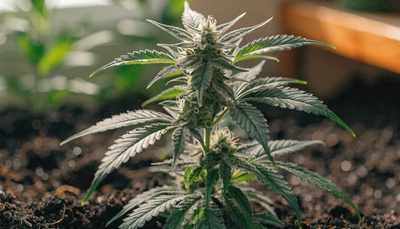
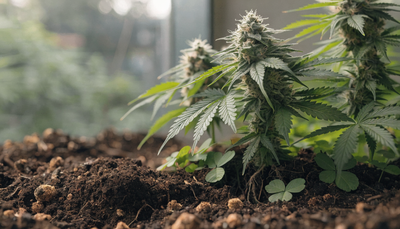
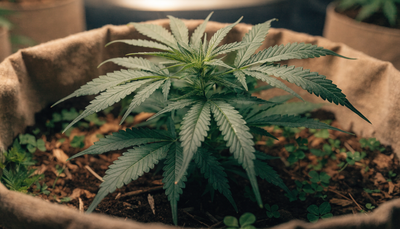
Cannabis is, at heart, a sun-loving annual weed — and that is very good news for the organic grower. Given full sun, living soil, and a season to stretch its legs, a single plant grown outdoors can outproduce a whole tent of indoor lights, on a fraction of the money and none of the electric bill. This guide walks you through a complete outdoor season the organic way: no synthetic salts, no bottled "flush," just biology doing what it has done for millions of years. It's written for adults growing legally in their own state — check your local plant-count and privacy rules before you drop a seed, and keep your garden discreet and out of reach of kids and pets.
Skip straight to the feeding schedule →
Start With the Right Genetics & Setup
Outdoors, your genetics decide more than your skill does. A cultivar that finishes in October will rot in a wet northern autumn; a heat-loving equatorial sativa will sulk in a cool short season. Match the plant to your climate first, and the rest of the season gets easier.
Photoperiod vs. autoflower
Photoperiod plants flower in response to shortening days — outdoors they naturally "flip" as the nights grow longer after the summer solstice. They get big, yield heavily, and reward a long season. Autoflowers flower on an internal clock roughly 3–4 weeks after sprouting regardless of daylight, finishing seed-to-harvest in about 10–12 weeks. Autos stay small, dodge late-season mold by finishing early, and let you run two or three crops in one summer. If you have a short or unpredictable season, autos are the forgiving choice; if you have a long warm season and want maximum yield, go photoperiod.
Seeds, clones, and feminized stock
Regular seeds produce roughly half males, which you must identify and pull before they release pollen (pollinated female flowers make seeds instead of resin). Feminized seeds sidestep that — nearly every plant is female, giving you the seedless "sinsemilla" flower you're after. Clones are genetic copies of a proven mother: identical, predictable, and a head start on the season, but they carry whatever pests or disease the mother had, so inspect them closely.
Picking a cultivar for your climate
Reliable, widely grown outdoor options include Blue Dream and Green Crack for vigor and yield, Northern Lights and Critical Mass as fast, compact early finishers for short seasons, and airy-budded, mold-shrugging types like Durban Poison and Frisian Dew for humid regions. In hot, dry climates almost anything thrives; in the damp Pacific Northwest or Northeast, prioritize mold resistance and an early finish above all else.
Site, sun, and containers
Cannabis is a full-sun crop: aim for a minimum of 6 hours of direct sun, ideally 8 or more, on a south-facing spot sheltered from harsh wind. More sun means denser, more resinous flowers. Decide early between growing in-ground (bigger plants, less watering, but you're stuck with your native soil) or in fabric "smart" pots of 15–30 gallons (portable, better drainage, air-pruned roots, and you control every scoop of soil). Beginners usually do best in fabric pots you can move if weather turns.
Soil Preparation & Living Soil
Organic growing lives and dies by the soil. Instead of spoon-feeding the plant soluble chemicals, you build a soil food web — bacteria, fungi, protozoa, and earthworms — that unlocks nutrients on the plant's schedule and defends the root zone for free. This is "living soil," and once it's dialed in, the plant practically feeds itself.
Building (or buying) living soil
A good living-soil mix is roughly a third quality compost or worm castings, a third aeration (perlite, pumice, or rice hulls), and a third a peat or coco base, plus mineral amendments and a handful of dry organic nutrients. Homemade compost is the single best thing you can add — it's free, teeming with microbes, and closes your garden's nutrient loop. New to the living-soil approach? Start with how to grow organically like Growganica, our 3-step living-soil system. Aim for a soil pH of about 6.0–7.0 (6.5 is the sweet spot); living soil is naturally forgiving and buffers itself far better than an inert medium ever will.
Mulch, cover crops, and no-till
Top your soil with a couple of inches of straw mulch to hold moisture, moderate soil temperature, and feed fungi as it breaks down. Sow a living mulch of clover or a clover-and-grass cover crop around the stem to fix nitrogen and shelter the microbes. Then resist the urge to dig — disturbing soil shreds the fungal networks you worked to build. Feed the top of the soil, keep it covered, and let the worms do your tilling.
Your Full Outdoor Season, Month by Month
An outdoor photoperiod grow follows the sun. Below is a Northern Hemisphere calendar; shift it earlier in the warm South and later the farther north you are. Autoflowers ignore the calendar — just start them any time from April through July once nights stay above 50°F, and count roughly 11–12 weeks to harvest.
Spring: germination and early growth
Start seeds indoors 4–6 weeks before your last expected frost — germinate them in a damp paper towel or straight into a small pot at 70–85°F, keeping the medium moist but never soggy. Give seedlings gentle light and don't overwater; the number-one killer of young plants is a drowned root zone, not hunger. Harden plants off by setting them outside for a few hours a day, increasing exposure over a week, before they live outdoors full time.
Early summer: the vegetative explosion
Transplant outdoors only after your last frost has passed and nighttime lows hold above 50°F — for much of the U.S. that's late May into June. Through the long days of June and July the plant does nothing but grow: this is vegetative growth, building the frame that will carry your harvest. Water deeply but let the top inch or two of soil dry between waterings, and start light training now (see below) while stems are still flexible.
Late summer: the flip to flower
As nights lengthen past roughly 12 hours of darkness after the solstice, photoperiod plants sense autumn coming and switch to flowering — typically late July into August across most of the country. You'll see a "stretch" where the plant can nearly double in height, then pistils (white hairs) appear at the branch tips and buds begin to swell. From flip to finish is usually 8–10 weeks, putting most outdoor harvests in late September through October, before the first hard frost.
Watering, training, and everyday care
Water in the cool of the morning so leaves dry through the day. Low-stress training (LST) — gently tying branches outward to open the canopy — and topping (snipping the main growing tip early in veg) both create a wider, flatter plant with many even colas instead of one dominant top, which means more bud sites catching more sun. Do all heavy training during veg; once flowering starts, limit yourself to tucking leaves and removing the odd leaf shading a bud site. A light defoliation of the inner canopy in early flower improves airflow and light penetration.
Organic Fertilizing Schedule
You do not need every product below. A healthy living-soil bed plus Microbes, Veg, and Bloom will carry a plant from seedling to harvest on its own. The power-ups are exactly that — optional dials for growers chasing bigger yields, better terpenes, and tougher plants. Cannabis is the one crop where serious growers tend to run the full lineup, so here's the whole toolkit and where each piece fits. All doses are per U.S. gallon of water; mix into a watering can and drench the root zone.
The essentials
- Microbes — your living-soil foundation, over a billion microorganisms per drop. Use 1–3 ml/gal at every watering, all season long, from the first seedling drink to the last day before harvest. This is the biology that actually delivers your nutrients.
- Veg (0.5-0-3) — the vegetative feed. Once seedlings have a few sets of true leaves, drench ¼ tbsp/gal once or twice a week through June and July, then taper as flowering begins.
- Bloom (0-6-4) — the flowering feed. As the plant flips, switch from Veg to ¼ tbsp/gal of Bloom, once or twice a week, carrying it through the bulk of flower to fuel bud development.
The power-ups
- Kelp It Real (0-0-14) — high-potassium seaweed for stress resilience, root growth, and terpene development. Use ¼ tsp/gal weekly across the whole season; it's the single best all-purpose add-on.
- King Krustacean — crab-meal calcium, slow-release nitrogen, and chitin, which primes the plant's own pest defenses. Drench ¼ tbsp/gal every 2–3 weeks through veg and early flower — and mind the units: that's a tablespoon, not a teaspoon like Kelp, so it's a meaningfully bigger scoop.
- Phishy (1.7-7-0) — cold-processed fish hydrolysate loaded with amino acids and microbe food; a fantastic root conditioner. Use 1–5 ml/gal as a soil drench during veg and early flower. Keep it in the soil, not on the buds.
- Vitamin Sea — magnesium and trace minerals for a foliar spray. Mist at 5 ml/gal during veg and early flower to correct micronutrient dips; stop foliar spraying once buds fatten, to keep moisture off the flowers.
- Incredible Bulk (0-10-25) — the late-stage bloom hammer for size and density. Start at ¼ tbsp/gal when buds are set and ramp up over the final weeks as the label directs (up to about 4 tbsp/gal at peak) to pack on weight and harden the flowers.
Season at a glance
| Stage | Feed the root zone |
|---|---|
| Seedling / early veg | Mostly plain water + Microbes 1–3 ml/gal; a light dose of Kelp It Real ¼ tsp/gal for roots. |
| Vegetative (Jun–Jul) | Veg ¼ tbsp/gal 1–2×/wk + Microbes + Kelp weekly; King Krustacean every 2–3 wks; Phishy drench; Vitamin Sea foliar as needed. |
| Transition / stretch | Taper Veg, start Bloom ¼ tbsp/gal; keep Microbes, Kelp, and King Krustacean for calcium through the stretch. |
| Peak flower (Aug–Sep) | Bloom ¼ tbsp/gal + Kelp weekly; add Incredible Bulk, ramping up; Microbes every watering. No foliar sprays on buds. |
| Ripening / last ~2 wks | Ease off — water with Microbes only. No flush. |
Organic means no flush
Synthetic growers "flush" with plain water for two weeks to rinse accumulated mineral salts out of the medium. In living soil there are no salts to rinse — so there is nothing to flush, and rinsing your soil would only starve the biology you spent all season building. Instead, simply ease off feeding in the final week or two and water with Microbes alone. The plant finishes on the reserves stored in its soil and leaves, fading naturally into ripeness. That gentle taper is what people are really chasing when they talk about "flushing" — you just get there without the collateral damage.
Organic Pest & Disease Management
A vigorous plant in living soil is your best pesticide — healthy plants shrug off pressure that flattens stressed ones, and the chitin in King Krustacean actively primes their defenses. Still, scout your plants twice a week, checking leaf undersides, and act early — knocking back ten bugs is far easier than fighting ten thousand.
Common outdoor pests
Watch for two-spotted spider mites (fine webbing and yellow stippling on leaves), aphids and whiteflies clustered on new growth, thrips (silvery scars), fungus gnats in soggy soil, and caterpillars — especially the corn earworm / budworm, which bores into flowers and invites rot. Your organic arsenal: encourage or release beneficials like ladybugs, lacewings, and predatory mites; knock back soft-bodied pests with insecticidal soap or neem oil (spray at dusk, never on open flowers in heat); spray Bacillus thuringiensis (Bt) to wipe out caterpillars without harming anything else; and use diatomaceous earth around the base for crawling insects. Companion plants like marigold, basil, and dill pull in the good bugs.
Mold and mildew
In humid regions, disease is a bigger threat than any insect. Powdery mildew shows as a white talc-like film on leaves; head it off with airflow, spacing, and preventive sprays before it spreads. Bud rot (Botrytis, gray mold) is the heartbreaker — it hollows out dense colas from the inside, often after rain. Prevent it by choosing airy-budded, mold-resistant genetics, defoliating for airflow, avoiding wetting the buds, and shaking rain off plants after a storm. At the first gray, mushy, or oddly-drying bud, cut it out immediately with clean shears and destroy it before it spreads to the whole cola.
Harvest & Reading Trichomes
When to harvest
Pistils are a rough guide — you're generally getting close when 60–80% of the white hairs have darkened and curled inward. But the real answer lives in the trichomes, the tiny mushroom-shaped resin glands coating the flowers. Look at them with a jeweler's loupe or a pocket microscope (30–60×):
- Clear / translucent — not ready; potency is still building. Wait.
- Cloudy / milky — peak THC and the most energetic, aromatic high. Most growers harvest when the majority of heads are cloudy with just a few turning amber.
- Amber — the THC is degrading toward CBN, giving a heavier, more sedative, "couch-lock" effect. Wait for more amber if that's the experience you want.
There's no single "right" moment — it's a preference dial. Harvest earlier and cloudier for a bright, heady effect; later and ambered for a relaxing body feel. Chop in the cool morning before the sun bakes off terpenes.
Drying and curing
The finish is where good weed becomes great weed. Hang whole branches upside down in a dark, ventilated space at roughly 60°F and 60% humidity for 7–14 days — slow is better. Stems should snap rather than bend when it's dry. Then trim and jar the buds in airtight glass at about 60–65% humidity, "burping" the jars open for a few minutes daily for the first couple of weeks. Cure for at least two to four weeks and the harshness mellows, the aroma deepens, and all that organic effort finally shows up in the smoke.
Troubleshooting
| Symptom | Likely cause & organic fix |
|---|---|
| Lower leaves yellowing in veg | Nitrogen hunger — feed Veg and let Microbes cycle N. A little fade of lower leaves is normal in late flower, not a problem. |
| Rusty/brown spots, curling new growth | Calcium/magnesium dip — add King Krustacean (calcium) and Vitamin Sea foliar (magnesium). |
| Burnt, clawing leaf tips | Overfeeding — ease off, water with Microbes only until the plant recovers, then resume at a lighter rate. |
| Wilting despite wet soil | Overwatering / poor drainage — let the top couple inches dry out; add aeration to the mix. Fabric pots help. |
| Male flowers (pollen sacs) appearing | Remove the whole plant promptly so it can't pollinate your females and seed the crop. |
| Wispy, airy, "foxtailing" buds | Heat or light stress — provide afternoon shade in extreme heat; keep plants away from nighttime light pollution, which can confuse flowering. |
Continue Growing
Ready to go deeper? For the complete photoperiod playbook — training, timing, and maximizing a long outdoor season — read how to grow photoperiod cannabis organically. If you'd rather run fast, forgiving, day-length-independent plants that finish in about ten weeks, start with how to grow autoflowers organically. Either way, keep the soil alive, feed the biology, and let the sun do the rest.