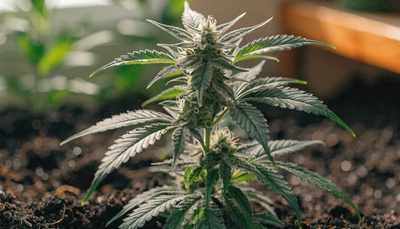
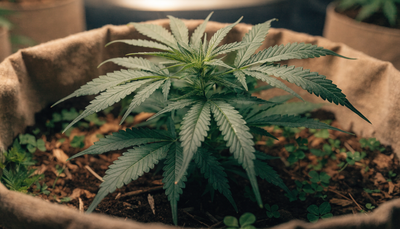
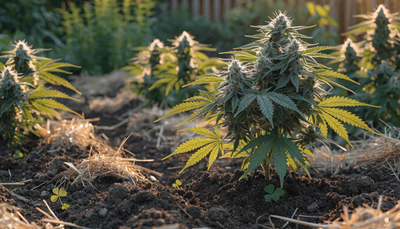
Cannabis has a reputation as a "heavy feeder," and in a bottle-and-salt system that's true — the plant is greedy, and synthetic programs push it with soluble nitrogen, phosphorus, and potassium delivered on a rigid weekly chart. But heritage growers who chase flavor, aroma, and clean smoke almost always land in the same place: living soil. Instead of spoon-feeding the plant, you feed a living community of microbes, and that community feeds the plant on demand. The result is smoother smoke, fuller terpene expression, and a garden that's genuinely forgiving.
This guide walks the full organic arc — genetics and setup, building living soil, and a complete stage-by-stage feeding schedule from seedling to harvest. It's written for legal adult-use and medical cultivation where you live. We won't cover sourcing genetics or anything illicit; this is pure organic horticulture. Skip straight to the feeding schedule if you already have plants in the ground.
Genetics & Setup
Before you think about nutrients, get the plant and the room right. Feeding can't fix bad genetics or a swampy tent.
Photoperiod vs. autoflower
The single biggest fork is life cycle. Photoperiod cultivars flower when the dark period lengthens — indoors you trigger that by flipping the light schedule from 18 hours on / 6 off to 12/12. They stay in vegetative growth as long as you keep long days, so you control size and timing. Autoflowers carry ruderalis genetics and flower on an internal clock regardless of light, racing seed to harvest in roughly 10–12 weeks. Autos stay on a long light schedule (18/6 or even 20/4) their whole life. The feeding philosophy below is identical for both; only the calendar compresses for autos. Both have dedicated guides linked at the end.
Choosing a cultivar
Living soil suits almost anything, but some cultivars are more beginner-friendly. Indica-leaning, sturdy plants like Northern Lights, Hindu Kush, and Granddaddy Purple are compact and mold-resistant. Reliable hybrids like Blue Dream, Wedding Cake, and Gorilla Glue #4 forgive mistakes and yield well. Long-flowering sativas such as Durban Poison and Amnesia Haze reward patience with soaring effects but demand more space and season. If you grow outdoors in a humid climate, lean toward airy, rot-resistant structures — dense-budded cultivars like Zkittlez can trap moisture and invite bud rot.
Environment
Cannabis wants warm days, cooler nights, and airflow. Aim for roughly 72–82°F during the day and about 8–10°F cooler at night. Humidity steps down as the plant matures: keep seedlings and early veg humid (around 60–70% RH) to ease rooting, then drop toward 40–50% RH in flower to protect the buds. Give every plant real air movement — a gentle breeze thickens stems and starves mold and mites. Indoors, run 18/6 in veg and 12/12 to flower photoperiods; outdoors, nature handles the clock.
Soil Preparation & Living Soil
Living soil is the whole game in organics. You're not building a growing medium so much as building a habitat: a diverse population of bacteria, fungi, protozoa, and beneficial nematodes that mineralize organic matter into plant-available nutrition, right at the root, exactly when the plant signals for it. Get the soil alive and most "feeding" becomes water plus a little maintenance.
Building the mix
A durable living-soil recipe has three parts working together:
- A base — quality peat- or coco-based potting soil, ideally cut with real compost and earthworm castings for biology and slow nutrition.
- Aeration — roughly 30% of the volume as pumice, perlite, or rice hulls, so roots and soil microbes get oxygen and the mix never goes anaerobic.
- Amendments — mineral and organic inputs (things like kelp meal, crustacean meal, neem cake, gypsum, and rock dusts) that give the microbes raw material to work on over the whole cycle.
The heart of that habitat is finished compost and earthworm castings — homemade or bagged, they inoculate the bed with exactly the kind of diverse life cannabis roots partner with. Homemade compost is the cheapest, highest-quality input you'll ever add. If you want to understand why that living biology matters more than any number on a fertilizer label, read how soil microbes drive everything.
Cannabis in living soil loves a big root run. Whether you're in fabric pots, raised beds, or open ground, give roots 7 gallons or more of soil per plant if you can, mulch the surface to keep the top layer alive, and consider a living cover crop (clover, for example) to fix nitrogen and shade the soil. A well-built bed can run for years with only top dressings between crops — true no-till.
Water & the one rule that protects your microbes
Municipal tap water usually carries chlorine or chloramine specifically to kill microbes — and it doesn't care that yours are the good kind. Before watering or mixing any biological input, dechlorinate: let water sit out 24 hours (works for chlorine), run it through a carbon filter, or use rainwater or well water. Water thoroughly but let the top inch or two dry between waterings; roots need to breathe, and constantly soggy soil is how you invite root rot and fungus gnats. In soil, pH mostly takes care of itself — a healthy microbial buffer keeps things in the roughly 6.0–7.0 range without you chasing a meter (more on why in throw away your pH tester).
How Organic Feeding Actually Works
In a living-soil garden you're managing two feedings at once. The slow feed is what you built into the soil and top-dress over time — meals and amendments that microbes break down over weeks. The quick feed is what you deliver in the watering can — soluble nutrients and biology that top up the plant during peak demand. The schedule below layers both. Read it as a framework, not a prescription: your plant, cultivar, and soil will tell you when to push and when to back off. Droopy, dark, clawed leaves mean too much; pale, slow, hungry plants mean it's time to feed.
Organic Fertilizing Schedule
You do not need every product below. A living-soil bed plus Microbes, Veg, and Bloom will grow you excellent cannabis start to finish. The power-ups are exactly that — levers to pull when a specific stage or cultivar asks for more. Start simple, add only what your garden is actually telling you it wants. All doses are per gallon of dechlorinated water unless noted, and cannabis growers tend to run the upper end of these ranges because the plant genuinely earns it.
Stage 1 — Seedling (roughly weeks 1–2)
Seedlings and fresh clones want almost nothing. Good living soil already holds enough gentle nutrition, and heavy feeding now just burns tender roots. Your only job is to establish biology and keep moisture even.
- Microbes — 1–3 ml/gal at every watering. This is the inoculation step: you're colonizing the root zone before the plant needs to eat.
- Kelp It Real (optional) — a light 1⁄4 tsp/gal. Kelp's natural growth hormones ease transplant stress and encourage rooting.
Stage 2 — Vegetative growth
Once the plant is stacking new leaves, it wants nitrogen for foliage and potassium for strong stems. This is where you build the frame that will hold your flowers, so feed to keep leaves a healthy medium green — not the dark, glossy over-fed green that signals excess nitrogen.
- Microbes — 1–3 ml/gal, ongoing. The engine never stops.
- Veg — start at 1⁄4 tbsp/gal and work up as the plant fills in. Light, balanced N with potassium; phosphorus is supplied biologically by your Microbes.
- King Krustacean — 1⁄4 tbsp/gal as a drench, or top-dress the soil surface. Crustacean meal delivers slow-release nitrogen and calcium, and its chitin primes the plant's own defenses against pests and pathogens. (Note the spoon: King Krustacean is a tablespoon base — four times the dose of Kelp It Real's teaspoon.)
- Phishy — as a root drench or dilute foliar. Fish hydrolysate is a workhorse of amino acids and gentle nutrients that also feeds your soil microbes directly.
- Vitamin Sea — foliar spray as needed. A quick magnesium and trace-mineral top-up that keeps veg leaves from yellowing between the veins.
Stage 3 — Transition & early flower (the flip, ~first 2 weeks of 12/12)
When photoperiod plants sense longer nights (you flip to 12/12), they "stretch" — often doubling in height — and set the sites that become buds. Ease off nitrogen and hand the plant more phosphorus and potassium for flower initiation. Autoflowers reach this point on their own clock, usually around week 4–5 from sprout.
- Microbes — 1–3 ml/gal, still every watering.
- Bloom — begin at 1⁄4 tbsp/gal, ramping up as flowers form. Higher P and K to power flower set.
- Veg — taper off over these two weeks; a little residual nitrogen is fine, a lot causes airy, leafy buds.
- Kelp It Real — 1⁄4 tsp/gal. Potassium and natural hormones support the stretch and early bud sites.
- Phishy — continue as a drench for aminos and microbe food during the energy-hungry stretch.
Stage 4 — Mid-to-late flower / bulking (roughly weeks 3–6 of flower)
This is where yield and quality are won. Buds swell, resin glands multiply, and terpenes develop. The plant's phosphorus and potassium demand peaks while nitrogen keeps falling. This is the window for your heaviest hitters.
- Microbes — 1–3 ml/gal, ongoing.
- Bloom — hold at the upper end of the range through peak flower.
- Incredible Bulk — the late-stage bloom booster and hardener. Start at 1⁄4 tbsp/gal and ramp up steadily through the back half of flower as the buds demand more phosphorus and potassium. This is the SKU that puts on density and weight.
- Kelp It Real — 1⁄4 tsp/gal. High potassium supports resin and terpene production and hardens the plant against heat and stress in the finish.
- King Krustacean — maintain calcium supply; solid cell walls mean denser, more rot-resistant flowers.
- Phishy — keep using through mid-flower, then ease off in the final weeks as you wind the whole program down.
Stage 5 — Ripening & harvest (final ~2 weeks) — no flush required
Here's the organic advantage: you do not "flush." Flushing — running plain water for two weeks to strip built-up salts — is a fix for a synthetic problem. Living soil never accumulates those harsh salts in the first place, so there's nothing to rinse out and no reason to starve your plant and shrink your yield at the finish line. Instead, simply ease off. Taper the boosters to nothing and let the plant coast to ripeness on water plus a little Microbes. Leaves fading and yellowing now is normal and desirable — the plant is pulling stored nutrients into the buds, which is exactly the clean, smooth finish you built this whole system to get.
- Microbes — 1–3 ml/gal; keep the soil alive to the end.
- Kelp It Real (optional) — a final light 1⁄4 tsp/gal or two can round out terpene development.
- Everything else — stopped. Plain, dechlorinated water is your finisher.
Your organic toolkit at a glance
The Essentials — the three you build a whole grow around:
- Microbes — living soil inoculant and the foundation of the whole system. How to use: 1–3 ml/gal at every watering, seed to harvest.
- Veg — light-N vegetative fertilizer for leaves and stems. How to use: 1⁄4 tbsp/gal in veg, tapering at the flip.
- Bloom — higher-P, K flowering fertilizer for bud set through peak flower. How to use: 1⁄4 tbsp/gal, starting at the flip.
Select power-ups — reach for these when a stage or cultivar asks for more:
- Incredible Bulk — late-bloom booster and hardener for density and weight. How to use: from 1⁄4 tbsp/gal, ramping up through late flower.
- Kelp It Real — soluble seaweed extract for stress resistance, terpenes, and rooting. How to use: 1⁄4 tsp/gal (a teaspoon — the lightest dose in the lineup).
- King Krustacean — crustacean meal for slow-release nitrogen, calcium, and pest-defense chitin. How to use: 1⁄4 tbsp/gal drench or a soil top-dress.
- Vitamin Sea — foliar magnesium and micronutrient concentrate. How to use: foliar spray as needed for interveinal yellowing.
- Phishy — fish hydrolysate and root conditioner, an everyday amino-acid and microbe food. How to use: drench or dilute foliar through veg and early-to-mid flower.
Organic Pest & Disease Management
The best organic pest control is a healthy plant in living soil — chitin-primed defenses, thick cuticles, and a robust microbiome make cannabis a harder target. Still, scout constantly, especially the undersides of leaves. Catch problems small.
The usual suspects on cannabis:
- Spider mites (Tetranychus urticae) — the classic indoor plague; look for fine webbing and pale stippling. Thrive in hot, dry, still air, so airflow and humidity are your first defense.
- Fungus gnats — larvae chew roots in soil kept too wet. Let the topsoil dry, add sticky traps, and lean on beneficial nematodes.
- Russet and broad mites — microscopic, damaging, and easy to miss until leaves twist and growth stalls; inspect new growth with a loupe.
- Thrips, aphids, and whiteflies — sap-suckers that respond well to predatory insects and prompt organic sprays.
- Caterpillars / budworms (corn earworm, Helicoverpa zea) — outdoor bud-borers that tunnel into flowers and trigger rot; hand-pick and use Bacillus thuringiensis (Bt).
On the disease side, watch for powdery mildew (white dusty patches on leaves), bud rot / botrytis (Botrytis cinerea, gray fuzz rotting buds from the inside — the reason you drop humidity and keep airflow up in flower), and root-zone rots like pythium and fusarium that follow overwatering and dead, anaerobic soil. Living soil's competitive microbiome is genuine protection here: a colonized root zone crowds out the pathogens. Beyond that, the organic playbook stays simple — scout often, invite beneficial insects (ladybugs, predatory mites, and lacewings), reach early for gentle sprays like insecticidal soap, neem, or Bt, and fix the environment (airflow, humidity, and drainage) that let the problem in.
Harvest & Trichomes
Cannabis is ready when the resin glands say so — not when the calendar does. Those glands, the trichomes, are the tiny mushroom-shaped stalks frosting the buds, and they change color as the plant ripens. Get a jeweler's loupe or a cheap 60x pocket microscope and read them:
- Clear / translucent — not ready; potency is still climbing. Harvest now and you'll be underwhelmed.
- Cloudy / milky — peak. Most trichomes milky means maximum potency with an energetic, "up" character.
- Amber — later still. As cloudy heads turn amber, effects shift heavier and more sedative.
Read the whole plant's balance and pick your window: mostly cloudy with a few amber suits most growers; more amber if you want a couch-lock finish. Ignore the sugar leaves and judge trichomes on the buds themselves. After the cut, the work isn't over — a slow dry (about 7–14 days in a dark room around 60°F and 55–62% RH) followed by a patient cure in sealed jars is what turns good flower into great flower, developing aroma and smoothing the smoke.
Troubleshooting
Living soil is forgiving, but here's how to read the common signals before you reach for a product:
- Lower leaves yellowing in veg — usually hungry for nitrogen. Feed Veg (or top-dress King Krustacean). In late flower, the same fade is normal ripening — leave it.
- Dark green, glossy, clawed-down leaves — too much nitrogen. Back off and water plain for a cycle.
- Yellowing between the veins on newer leaves — often magnesium; a Vitamin Sea foliar spray corrects it fast.
- Rust-brown spots — commonly a potassium or calcium call; Kelp It Real and King Krustacean cover both bases.
- Drooping, slow, "wet feet" plants — overwatering, not underfeeding. Let the soil dry and check for fungus gnats before adding anything.
- Nutrient lockout / crusty white salts — rare in true living soil, and a sign you've been overdoing bottled inputs. Ease off, water plain, and let the biology rebalance — no harsh flush needed.
When in doubt, do less. A slightly hungry cannabis plant recovers in days; an overfed one sulks for weeks.
Continue Growing
You've got the feeding system — now go deep on the cycle that fits your garden. For full-season plants with maximum size and yield control, read our complete guide to growing photoperiod cannabis organically. If you want fast, compact, beginner-friendly plants that flower on their own clock, start with what are autoflowers. Both run this exact organic program — just on their own calendar.