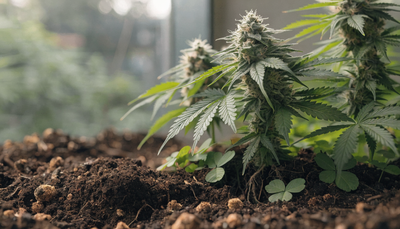
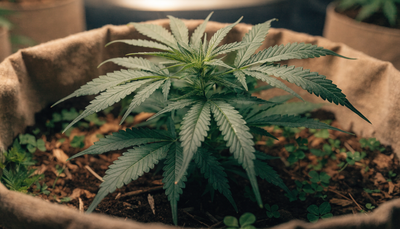
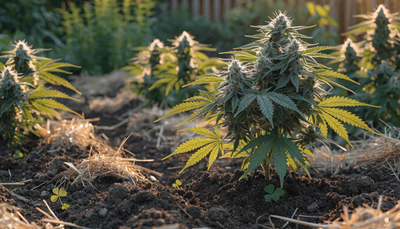
Every cannabis pest and disease problem is really a symptom of something upstream — a stressed plant, a stagnant room, a lifeless soil, a wet canopy at lights-out. The organic grower's advantage is that you fix the upstream conditions instead of spraying your way out of a crisis every week. A plant grown in living soil, fed a balanced organic diet, and kept in a clean, moving-air environment is genuinely harder for a spider mite or a spore of powdery mildew to exploit. This guide walks you through preventing and treating the problems that actually show up on cannabis — mites, gnats, thrips, powdery mildew, bud rot, root rot — using tools you can spray on a plant you intend to smoke, without ever reaching for a synthetic miticide.
Start With Genetics and a Clean Setup
Your first line of defense is chosen before you germinate a seed. Cultivars are not equally tough. Dense, chunky indica-leaning buds — think tightly-packed OG and Kush structures — trap humidity in the core of the flower and are far more prone to botrytis (bud rot) than airier, more open flowers. Sativa-dominant heritage lines like Durban Poison, or airier hybrids such as many Blue Dream phenotypes, dry out faster after a humid night and shrug off mold pressure that would rot a solid nug. If you grow in a humid climate or a crowded tent, weight your selection toward open bud structure and known mildew tolerance.
Setup does the rest of the prevention work:
- Quarantine new plants. Clones and gifted cuttings are the number-one way russet mites, broad mites, and hop latent viroid enter a clean room. Isolate anything new for two weeks and inspect under a loupe before it joins your garden.
- Move the air. An oscillating fan and an exhaust that turns the room's air over keeps leaf surfaces dry and makes it hard for spores to settle. Stagnant, still air is powdery mildew's favorite climate.
- Control humidity by stage. Seedlings and early veg like 60–70% relative humidity; by mid-flower you want to pull it down to 45–50%, and in the final ripening weeks below 45% to starve Botrytis. Aim for stable temps in the high 70s °F with lights on and avoid big drops below 60 °F at night, which condenses moisture on cold flowers.
- Sanitize. Clean tools between plants, don't reuse un-sterilized soil from a sick crop, and keep the floor clear of fallen leaves that harbor spores and larvae.
Soil Preparation and Living Soil
A living soil is a pest-and-disease strategy disguised as a growing medium. When your root zone is full of beneficial bacteria and fungi, competing for space and food and actively antagonizing pathogens, opportunists like Pythium and Fusarium simply have a much harder time getting established. A sterile, inert medium has no such defenders — one contaminant walks into an empty room.
Build your base from a quality organic potting soil and amend it with compost. Good, mature compost is the single best thing you can add: it delivers the microbial diversity that makes soil disease-suppressive, plus slow-release nutrition and structure that holds air. That living community is the whole point — our guide to building living soil with microbes covers how those organisms crowd out pathogens. Use finished, well-aged compost rather than a slimy, anaerobic mess that introduces problems instead of solving them.
Round out the mix with aeration — perlite, pumice, or rice hulls at roughly a quarter to a third of the volume — so the soil drains freely and never stays waterlogged. Overwatered, oxygen-starved roots are the origin story of nearly every root-rot case in cannabis. Then, at transplant, inoculate the root zone with Microbes, our soil inoculant, to seed the beneficial community before any pathogen can claim the territory. A living soil, kept fed and moist, becomes self-defending over time.
Preventing and Treating Cannabis Pests and Diseases Organically
Organic pest management is a mindset before it's a spray bottle. The framework is Integrated Pest Management (IPM): prevent first, scout constantly, identify precisely, and treat with the least-disruptive effective tool. Scout every few days — turn leaves over and look at the undersides with a 30x loupe, where mites and eggs hide. Hang yellow sticky cards to catch flying adults and give you an early warning system. The goal is to catch an infestation at ten bugs, not ten thousand.
Common Cannabis Pests
- Two-spotted spider mites (Tetranychus urticae). The classic cannabis nightmare. Look for tiny stippled yellow dots on leaves, then fine webbing across the canopy in heavy infestations. They explode in hot, dry, still air. Knock them back with insecticidal soap or a neem-oil foliar in veg, hitting leaf undersides, and repeat every 3–5 days to break the egg cycle. For a serious outbreak, release predatory mites (Phytoseiulus persimilis), which hunt spider mites and clean up what sprays miss.
- Fungus gnats (Bradysia spp.). Little black flies drifting up from the soil; their larvae chew tender roots and open the door to root rot. They breed in wet topsoil, so let the top inch or two dry between waterings. Treat the larvae with Bacillus thuringiensis israelensis (Bti, the mosquito-dunk bacterium) drenched into the soil, add beneficial nematodes, and trap the adults on yellow sticky cards. A layer of sand or worm castings on the surface helps break their cycle.
- Thrips. Slender rasping insects that leave silvery, scarred patches and black specks of frass on leaves. Spinosad (an OMRI-listed bacterial-derived insecticide) is the most effective organic knockdown; sticky cards and predatory mites (Amblyseius spp.) round out the program.
- Aphids and root aphids. Soft-bodied colonies on new growth (or on roots, below the line) that suck sap and leave sticky honeydew. Insecticidal soap and neem handle foliar aphids; release ladybugs and lacewings for standing control. Root aphids are tougher — treat with beneficial nematodes and a spinosad soil drench.
- Hemp russet and broad mites. Microscopic — you'll see the damage (twisted, glossy, stunted new growth and blistered leaves) long before you see the mite. These hitchhike on clones, which is exactly why you quarantine. Predatory mites and repeat spinosad or sulfur applications in veg are your tools; act fast, because they wreck growing tips.
- Caterpillars and budworms (Helicoverpa spp.). Outdoor and greenhouse growers find them boring into buds, leaving frass and rotting cores. Bacillus thuringiensis var. kurstaki (Btk) is a targeted, harmless-to-everything-else biological — the caterpillar eats treated leaf tissue and stops feeding. Spray preventively in early flower where moth pressure is high.
Common Cannabis Diseases
- Powdery mildew (PM). White, talcum-powder patches on leaf tops that spread to a full dusting. It thrives in stagnant air with high humidity and moderate temps — a crowded, poorly-ventilated tent. Improve airflow immediately, drop the humidity, and remove heavily-infected leaves into a bag (don't shake spores loose). Spray potassium bicarbonate to knock it down on contact, and use a Bacillus subtilis/amyloliquefaciens biofungicide preventively — these beneficial bacteria colonize the leaf and crowd out the fungus. Avoid oil sprays on open flowers.
- Bud rot / gray mold (Botrytis cinerea). The heartbreaker — it starts inside a dense bud and you don't see it until a cola browns, wilts, and turns to gray fuzz. It's driven by humidity trapped in the flower core plus cool nights. Prevention is nearly the whole battle: airy genetics, RH below 45% in late flower, strong canopy airflow, and not letting flowers sit wet. Scout your densest colas daily; if you find it, cut generously well past the rot and remove it from the room entirely. There is no spraying your way out of established bud rot in late flower.
- Root rot (Pythium) and damping-off. Overwatering and dead soil produce mushy brown roots, wilting despite wet media, and collapsed seedlings. A living, oxygen-rich root zone is the fix — proper aeration, letting soil breathe between waterings, and a thriving Microbes population outcompeting the pathogen.
- Fusarium wilt and root rot. A soil-borne fungus causing one-sided wilting, yellowing, and browning of the vascular tissue. There's no organic cure once it's systemic — you prevent it with clean media, disease-suppressive compost, and by never reusing soil from an infected plant.
- Septoria leaf spot. Yellow-then-brown spots that climb from the lower leaves upward, mostly outdoors. Remove affected foliage, improve airflow, avoid splashing soil onto leaves, and mulch to block spore splash-up.
The Organic Treatment Toolkit
Keep these on the shelf and match the tool to the problem rather than nuking everything at once:
- Neem oil (azadirachtin) — broad foliar for mites, aphids, and thrips in vegetative growth. Spray at lights-off to avoid leaf burn. Never spray neem on flowering buds — it lingers and taints flavor.
- Insecticidal soap and horticultural oil — contact knockdown for soft-bodied pests; gentle and residue-free, but reapply because they don't kill eggs.
- Spinosad — OMRI-listed, potent on thrips, caterpillars, and russet/broad mites; the go-to when soap and neem aren't enough.
- Bt (kurstaki for caterpillars, israelensis for gnat larvae) — surgically targeted biologicals that spare beneficials.
- Potassium bicarbonate and Bacillus subtilis biofungicides — your PM and mold program, safe to use later into flower than oils.
- Beneficial insects and mites — ladybugs, lacewings, predatory mites, and nematodes turn your garden into a self-policing ecosystem.
One organic input pulls double duty here. King Krustacean is a chitin-and-calcium amendment, and chitin — the material that makes up insect exoskeletons and fungal cell walls — acts as a signal that primes the plant's own immune response. Working chitin into your soil and feeding it through the grow builds sturdier cell walls and a plant that defends itself, which is exactly the kind of upstream fix organic growing is built on.
Organic Fertilizing Schedule
A well-fed plant resists pests and disease; an over-fed one attracts them. Excess nitrogen in particular produces soft, lush, sappy growth that sucking pests love and that holds humidity in the canopy. The organic answer is to feed the soil life on a balanced, stage-appropriate diet and let the microbes deliver nutrition at the plant's pace. Cannabis is a hungry crop, so it uses the full Growganica lineup — the three Essentials as the backbone, and the power-ups layered in where each stage needs them. Start every product at the low end of its label rate, watch the plant, and work up. These are structural guidelines; follow the rate on the label and our feeding schedule.
Seedling & Clone (Weeks 1–2)
Go light — young roots burn easily. Mostly plain water, plus Microbes at transplant to colonize the root zone, and a splash of Phishy fish hydrolysate to condition roots and feed the microbes. A very dilute dose of Kelp It Real (it's concentrated — roughly ¼ tsp per gallon) helps clones root and eases transplant stress.
Early Vegetative (Weeks 3–4)
Nitrogen drives leafy frame-building now. Introduce Veg at a light rate, keep Microbes going every week or two, and continue Kelp It Real for root development and stress resilience. Keep Phishy in the rotation to build a deep, healthy root system — your best insurance against root disease.
Late Vegetative (Weeks 5–6+)
Push Veg toward full strength as the plant packs on size. Now is the time to top-dress King Krustacean (about ¼ Tbsp per gallon, or worked into the soil surface) for calcium-strong cell walls and that chitin-primed pest defense. Add Vitamin Sea if you see any micronutrient hunger, and keep the kelp and microbes flowing.
Transition & Early Flower (Flower Weeks 1–2)
As the plant stretches into flower, taper Veg down and phase in Bloom. Backing off nitrogen here isn't just about buds — softer, over-nitrogen tissue is what mildew and mites exploit, so leaner flowering nutrition is also a defensive move. A dose of Kelp It Real helps the plant ride out the stretch, and Microbes keep the root zone competitive.
Peak Flower (Flower Weeks 3–6)
Bud development is the priority. Run Bloom at full strength and layer in Incredible Bulk, our bloom booster, for bigger, denser, more resinous flowers. Keep King Krustacean feeding calcium into swelling buds and Vitamin Sea covering micronutrients and aroma. Ease the kelp back as you approach the finish.
Ripening & Harvest (Final ~2 Weeks)
Here's the part synthetic growers get wrong: organically grown cannabis does not need a chemical flush. Flushing is a workaround for salt-based nutrients accumulating in an inert medium. In living soil, nutrition is bound in organic matter and released biologically, so there are no harsh salts to rinse out — a flush just starves your soil life right before the finish. Instead, simply ease off feeding: water with plain water or a light Microbes tea for the last week or two and let the plant draw down its reserves. The reward is the smooth, clean, full-flavored smoke that living-soil cannabis is known for.
Organic Pest & Disease Defense Beyond the Grow Room
Your cannabis doesn't exist in a bubble — the aphids on your tomatoes and the mites on your ornamentals are the same populations that migrate to your plants, and the beneficial insects you cultivate elsewhere patrol the whole garden. Treating your entire growing space as one connected ecosystem is the highest-leverage organic move you can make. Build habitat for predators with flowering companion plants like alyssum, dill, and yarrow; keep the area clean of debris; and rotate where you grow to break soil-pathogen cycles. Every principle here — prevention first, feed the soil, encourage predators, spray least and last — applies identically to your vegetables, herbs, and flowers. See how the same living-soil method carries across the whole garden in our guide to growing organically like Growganica, the 3-step system these pest-and-disease tactics are built on.
Harvest & Trichomes
Harvest timing is both a quality decision and a disease decision — leaving dense buds on the plant too long in humid conditions invites the bud rot you worked all season to avoid. Read ripeness at the trichomes, the tiny resin glands coating the flowers, using a loupe or pocket microscope:
- Clear trichomes — not ready; the plant is still building potency.
- Cloudy/milky — peak THC, the window most growers target for an energetic, aromatic finish.
- Amber — cannabinoids converting toward a heavier, more sedative, body-forward effect. A mix of mostly cloudy with some amber suits most growers.
Cut in the cooler, drier part of the day, and if bud rot pressure is high, don't gamble the last few percent of ripeness against a mold outbreak. Then dry slow and controlled — hang whole plants or branches in a dark room around 60–65 °F and 55–60% RH for 7–14 days until small stems snap rather than bend. Cure in sealed glass jars, burping them daily at first to release moisture. A proper slow dry and cure is itself mold prevention: rush it in a warm, wet room and Botrytis will finish the job it started in the garden.
Troubleshooting
- Yellowing lower leaves in veg. Usually a nitrogen call for more food — step up Veg. In flower, some lower-leaf fade is normal as the plant moves nitrogen into buds.
- Stippled, speckled leaves with fine webbing. Spider mites. Loupe the undersides, hit with soap or neem every 3–5 days, and release predators for a bad outbreak.
- White powder on leaf tops. Powdery mildew. Airflow up, humidity down, remove infected leaves, spray potassium bicarbonate and a Bacillus biofungicide.
- A cola browning and wilting from the inside. Bud rot. Cut well past it, remove from the room, and drop late-flower humidity below 45%.
- Wilting despite wet soil. Root rot from overwatering. Let the medium dry and breathe, and lean on Microbes to rebuild the root zone.
- Rust-colored spots or interveinal yellowing mid-flower. Often calcium or micronutrient hunger — feed King Krustacean and Vitamin Sea.
- Twisted, glossy, stunted new growth. Suspect russet or broad mites. Quarantine, loupe hard, and treat tips with spinosad or sulfur in veg.
Don't panic over a single spotted leaf or a couple of gnats on a sticky card — a healthy living-soil plant tolerates minor pressure, and the fastest way to hurt a crop is to over-spray it in a panic. Observe, identify, then respond with the lightest effective tool.
Continue Growing
Pest and disease management is one pillar of a healthy grow — pair it with the full cultivation picture. For the complete start-to-finish walkthrough, read our complete guide to growing photoperiod cannabis organically. And if you want a faster, more forgiving crop that races past a lot of pest pressure on a shorter clock, learn what autoflowers are and whether they fit your garden.